
Just recruiting and retaining talent isn’t enough for employee management in the UAE. HR teams are responsible for employment contracts, payroll administration, employee records, leave management, onboarding, offboarding, and ongoing compliance with UAE labor regulations.
In the UAE, HR administration is closely tied to local labour and immigration rules. An Employer of Record (EOR) doesn’t just handle paperwork it also manages UAE‑specific requirements such as coordinating work permits and residence visas with MoHRE or the relevant free zone authority, running payroll in line with the Wage Protection System (WPS), and ensuring that employment contracts comply with Federal Decree‑Law No. 33 of 2021 on fixed‑term contracts. By taking over these countries‑specific obligations, an EOR helps foreign employers stay compliant while avoiding the need to build full in‑house HR and legal infrastructure in the UAE.
The challenge becomes greater for foreign employers when they scale their businesses to new locations. HR professionals spend more time on paperwork, compliance requirements, and routine administrative tasks than on strategic initiatives.
An EOR is a solution to these challenges. That’s why this guide explains how an EOR reduces the internal HR burden in the UAE.

Author

Co-author
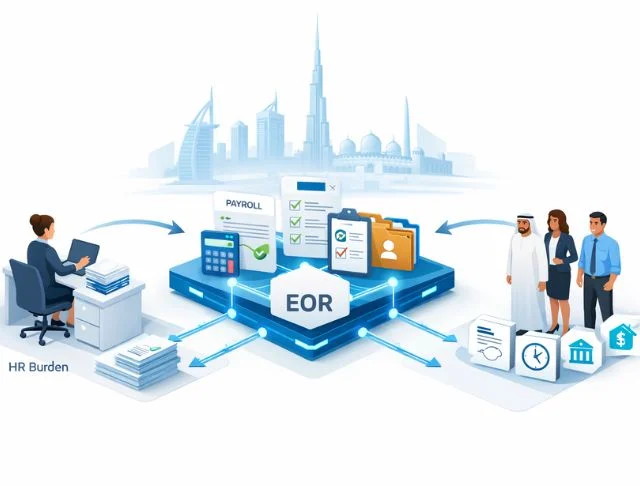
Just recruiting and retaining talent isn’t enough for employee management in the UAE. HR teams are responsible for employment contracts, payroll administration, employee records, leave management, onboarding, offboarding, and ongoing compliance with UAE labor regulations.
In the UAE, HR administration is closely tied to local labour and immigration rules. An Employer of Record (EOR) doesn’t just handle paperwork it also manages UAE‑specific requirements such as coordinating work permits and residence visas with MoHRE or the relevant free zone authority, running payroll in line with the Wage Protection System (WPS), and ensuring that employment contracts comply with Federal Decree‑Law No. 33 of 2021 on fixed‑term contracts. By taking over these countries‑specific obligations, an EOR helps foreign employers stay compliant while avoiding the need to build full in‑house HR and legal infrastructure in the UAE.
The challenge becomes greater for foreign employers when they scale their businesses to new locations. HR professionals spend more time on paperwork, compliance requirements, and routine administrative tasks than on strategic initiatives.
An EOR is a solution to these challenges. That’s why this guide explains how an EOR reduces the internal HR burden in the UAE.
Author
Co-author
Get in Touch with Us

Leah Maglalang
Business Coordinator UAE

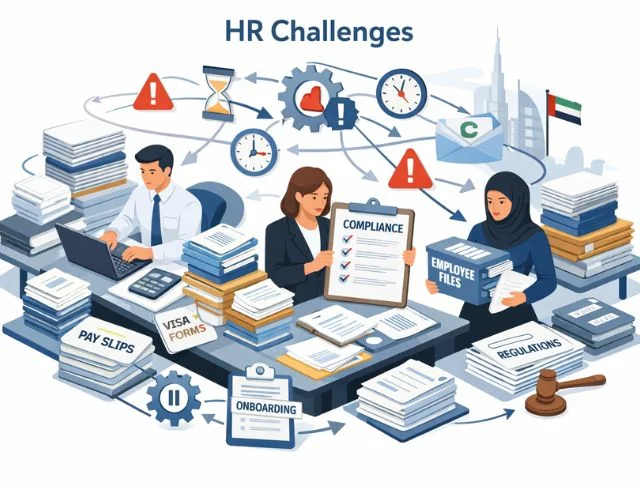
There are many administrative tasks involved in hiring and managing employees. These tasks can include preparing employment contracts, collecting and verifying employee documentation, maintaining personnel records, recording onboarding activities, and more.
As headcount increases, these responsibilities become more time-consuming. Even routine tasks such as updating employee records, tracking leave balances, and maintaining documentation can become more difficult. Without an efficient process, you may find yourself overwhelmed by a large workload.
In addition to day-to-day administration, HR teams must comply with UAE employment laws and regulations. These may include maintaining compliant employment documentation, adhering to labor law requirements, managing statutory obligations, and keeping up with regulatory updates.
Failure to comply with legal requirements can expose a business to legal, financial, and operational risks. As a result, HR professionals often dedicate significant time to monitoring regulations, reviewing processes, and maintaining accurate records to ensure compliance.

In the UAE, an EOR typically becomes the legal employer of record for payroll and visa/work permit sponsorship, while the client company directs the day‑to‑day work.
In workforce management, one of the most time-consuming aspects is preparing and maintaining employment documentation. HR teams are responsible for keeping all documents and records accurate, compliant, and up to date. An EOR manages many of these administrative responsibilities, including:
Employee onboarding involves much more than introducing new hires to the company. HR departments must coordinate multiple administrative processes. An EOR typically handles onboarding-related administration, such as:
Employee departures require careful administration. HR teams must also manage resignation documents, final payments, records, and other employment-related procedures. An EOR manages many offboarding responsibilities, including:

Issuing employee salaries is not the only responsibility involved in payroll administration. Payroll data accuracy, processing compensation changes, maintaining payroll records, and handling employee salary-related inquiries also fall under this function. An EOR manages key payroll administration tasks, including:
Ongoing administrative oversight falls under this category. A common aspect across many HR responsibilities is maintaining accuracy, proper management, and responding to employee inquiries. These responsibilities are equally important for leave administration, benefits management, and employee records. An EOR typically administers:
Payroll administration also includes maintaining documentation and reporting records that are necessary for employment compliance and audit readiness. An EOR helps manage payroll compliance administration by:

Continuous attention is essential when managing employment regulations. HR managers must stay informed about legal updates, employment obligations, and administrative requirements. An EOR helps organizations remain aligned with UAE employment requirements by:
What does managing employment compliance documentation mean?
It involves maintaining accurate and up-to-date records while ensuring that missing, incomplete, or outdated documentation is reviewed and updated when necessary. An EOR manages a wide range of compliance-related documentation, including:
Manual HR processes often increase the likelihood of administrative mistakes. Errors in employment documentation, payroll administration, recordkeeping, or compliance processes can cause operational inefficiencies and increase compliance risks. An EOR helps reduce these risks by:

HR teams deliver the greatest value when they focus on people and performance. When employment administration responsibilities are transferred to an EOR, HR professionals have more time to focus on strategic priorities such as:
Many HR functions involve repetitive administrative tasks. These tasks require significant time and attention. As a result, the productivity of internal HR teams is reduced. An EOR helps eliminate much of this administrative burden by handling:
As organizations grow, administrative workloads often increase. Organizations may then need additional resources to manage these responsibilities. An EOR provides scalable employment infrastructure. The key benefits of an EOR include:

An EOR manages employment administration. However, workforce strategy remains the responsibility of the employer. Internal HR teams continue to make decisions that affect the organization. These responsibilities typically remain in-house:
An EOR does not manage employees’ day-to-day work or organizational culture. Internal HR managers and leaders remain responsible for creating a productive work environment. Key in-house responsibilities include:
The most effective EOR partnerships operate through close collaboration. While the EOR manages employment administration, internal HR teams provide workforce direction. A division of responsibilities may look like this:
Managing payroll, compliance, onboarding, and employee documentation internally can create a significant administrative burden for HR teams. An Employer of Record (EOR) helps reduce this workload by handling many employment-related administrative responsibilities. FMC Group’s EOR services help companies hire and manage employees in the UAE compliantly while minimizing internal HR administration and your HR team can focus on people, performance, and growth.
You are currently viewing a placeholder content from Calendly. To access the actual content, click the button below. Please note that doing so will share data with third-party providers.
More InformationYou are currently viewing a placeholder content from Calendly. To access the actual content, click the button below. Please note that doing so will share data with third-party providers.
More InformationYou need to load content from reCAPTCHA to submit the form. Please note that doing so will share data with third-party providers.
More InformationYou are currently viewing a placeholder content from Turnstile. To access the actual content, click the button below. Please note that doing so will share data with third-party providers.
More InformationYou are currently viewing a placeholder content from Vimeo. To access the actual content, click the button below. Please note that doing so will share data with third-party providers.
More InformationYou need to load content from reCAPTCHA to submit the form. Please note that doing so will share data with third-party providers.
More InformationYou are currently viewing a placeholder content from Elfsight. To access the actual content, click the button below. Please note that doing so will share data with third-party providers.
More InformationYou are currently viewing a placeholder content from reCAPTCHA. To access the actual content, click the button below. Please note that doing so will share data with third-party providers.
More Information