Your decision between FMC Group and Remote depends on how much you value hands-on HR support versus a standardized global platform.
In this comparison, you’ll see which provider better fits your hiring model, internal HR capacity, country needs, and growth plans.
I’m comparing support, payroll, compliance, onboarding, pricing, flexibility, employee experience, and company-size fit. Let’s start.

Author
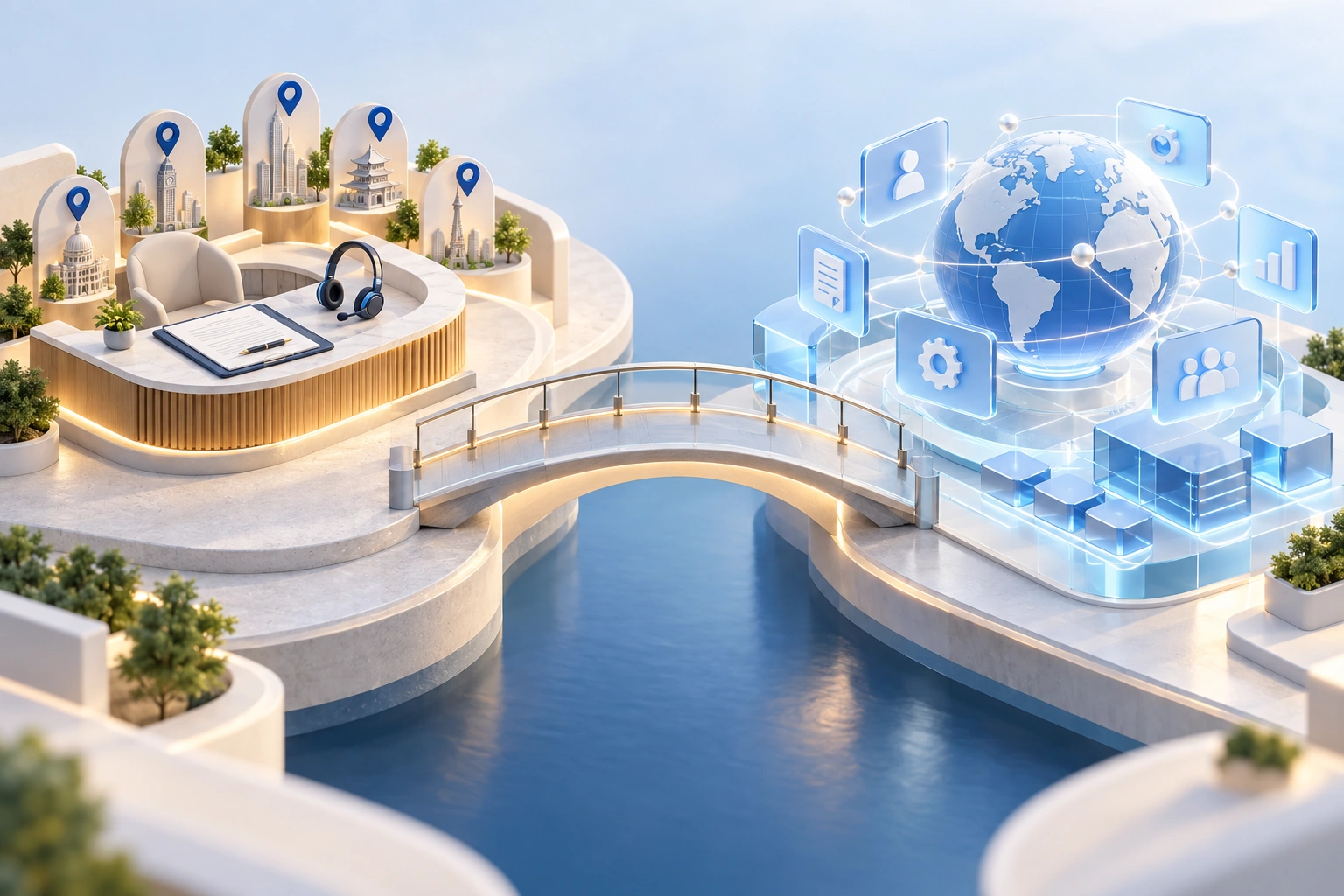
Your decision between FMC Group and Remote depends on how much you value hands-on HR support versus a standardized global platform.
In this comparison, you’ll see which provider better fits your hiring model, internal HR capacity, country needs, and growth plans.
I’m comparing support, payroll, compliance, onboarding, pricing, flexibility, employee experience, and company-size fit. Let’s start.
Author

Feature | FMC Group | Remote |
Best for | Employers that want hands-on HR support and local guidance. | Employers that want a standardized global HR platform and self-service. |
Service model | People-first, service-led, with digital support tools. | Platform-first, with automated workflows and specialist support. |
Dedicated account manager | Dedicated contact for both employer and employee. | Onboarding specialist, implementation support, then a named CSM. |
Payroll | Payroll, taxes, social contributions, expenses, allowances, leave, and benefits. | Payroll, taxes, withholdings, benefits, and employment costs. |
Compliance | Contracts, payroll, benefits, terminations, and local compliance. | Localized contracts, compliance workflows, IP protection, and owned EOR entities. |
HR guidance | Hands-on support for compensation, benefits, contracts, leave, and terminations. | In-platform guidance and access to in-house experts. |
Global hiring | 50+ countries; entity ownership should be verified by country. | 90+ EOR countries; Remote says it owns its EOR entities directly. |
Best for SMBs | SMBs that want an outsourced HR partner and customized support. | Digital-first SMBs that value pricing transparency, self-service, and integrations. |
Enterprise | Can support larger employers, but public enterprise documentation is more limited. | Stronger documented fit for integrations, APIs, permissions, and security. |

Go with FMC Group if you want a more hands-on EOR partner, direct human support, and local HR guidance. FMC Group may be a better fit if:
Partner with Remote if you prefer an automated SaaS platform and want to manage much of your remote hiring through standardized workflows. It may be the better fit if:

The biggest difference lies in how each provider structures the employer experience.
FMC Group takes a people-first, service-led approach. Employers begin with a consultation and work through a dedicated contact.
Remote takes a platform-first approach. You handle onboarding, payroll, documents, approvals, reporting, and integrations using its unified system.
When you partner with FMC Group, the team gets on a call with you to understand your hiring requirements. You can provide your own candidates or use FMC Group’s recruitment services.
FMC then discusses salary, benefits, and contract options. The employer signs a service agreement with FMC Group, while the employee signs a local employment agreement with FMC. In Germany and Türkiye, onboarding can take 1–2 business days once all required documents are received and the employment contract is agreed.
As Remote is a platform-first provider, you manage employees through country-specific onboarding, localized employment contracts, payroll setup, and specialist support. Remote describes a five-step implementation process and reports an average onboarding time of roughly 2–2.3 days, while noting that standard onboarding may take up to 30 days.
FMC Group’s EOR service includes payroll accounting, salary payments, taxes and social contributions, approved expenses and allowances, benefits, and leave tracking. The key difference is that FMC Group emphasizes locally managed payroll processing and direct resolution.
Remote connects payroll with employee records, expenses, leave, documents, and time data within its platform. You can use HR and accounting integrations if you have a larger organization.
FMC Group acts as the legal employer and manages employment contracts, payroll, statutory benefits, taxes, and terminations, while the client manages the employee’s daily work.
Remote also handles legal-employer obligations and manages localized contracts, payroll, benefits, right-to-work checks, absence, discipline, and termination.
Remote states that it owns and operates its EOR entities directly. FMC Group publicly confirms its own entities in some countries, but its direct-entity or partner structure should be verified country by country. Both providers can help reduce administrative and legal exposure, but neither eliminates compliance risk.
FMC Group gives employees access to digital tools for tasks such as leave requests and expense submissions. It also emphasizes direct access to human contact.
Depending on the country, FMC Group may also administer local benefits, insurance, company cars, and expense reimbursements. This can create a more tailored employee experience.
Remote provides a more self-service employee experience. Employees can use its web and mobile tools to submit documents, request leave, track time, upload expenses, access employment records, and complete onboarding activities.
Support is one of FMC Group’s strongest differentiators.
FMC emphasizes a dedicated contact for both the employer and employee. It offers direct human communication and consultative local assistance.
Remote also provides human support. It has dedicated onboarding specialists, implementation support, a named Customer Success Manager after the first employee is onboarded, and 24/7 in-account chat. However, its support model relies more heavily on platform workflows and specialist escalation.
FMC Group does not publish one universal global EOR price. Instead, employers receive customized, country-specific pricing based on their hiring requirements and service scope.
Remote provides considerably more public pricing information. As of October 2026, Remote publicly lists its EOR service at $699 per employee per month when paid monthly or $599 per employee per month when paid annually upfront.
Remember that onboarding speed is not the same for every employee or country. FMC Group states that onboarding can take 1–2 business days in Germany and Türkiye once all required documents are provided and the employment contract is agreed. Remote reports an average of roughly 2–2.3 days but notes that standard onboarding may take up to 30 days. Country, documentation, visa, benefits, role, and compliance requirements can extend the timeline.
FMC Group’s EOR structure has two agreements: a service agreement between FMC Group and the client and a local employment agreement between FMC Group and the employee. Employers can then examine the proposed contract for provisions covering payroll, benefits, compliance responsibilities, terminations, fees, liability, confidentiality, renewals, and offboarding.
Remote provides more contract-management functionality within its platform. Its system supports employee records, e-signatures, contract amendments, employment letters, lifecycle timelines, and resignation workflows. Its general terms include an initial 12-month term and automatic renewal.
FMC Group also manages employment administration, but its public materials provide less detail about platform-based contract-management functionality than Remote’s.
FMC Group offers flexibility through customized services and country-specific support. Depending on the market, you as a foreign employer can add tailored benefits, insurance, allowances, company cars, recruitment, and other employment or market-entry services.
Remote customers can also choose monthly or annual EOR pricing, localized benefits, contract workflows, integrations, add-ons, and API access. However, Remote retains control over employment changes and may restrict arrangements it cannot support.


Company size | Better choice |
Startup | Remote for self-service, public pricing, and a first international hire. FMC Group may be better if the founders need extensive local guidance. |
SMB | FMC Group when a lean HR team needs an outsourced local partner. Remote when the business is digital-first and expanding across multiple countries. |
Enterprise | Remote, based on stronger public evidence for integrations, API access, role-based permissions, enterprise planning, direct entity scale, and security assurance. |
Need HR guidance | FMC Group, because hands-on guidance, direct contact, recruitment, and market-entry support are central to its service model. |
HR department already exists | Remote, because an established HR team can make better use of standardized workflows, dashboards, approvals, reporting, and integrations. |

You may prefer FMC Group over Remote because of its direct human support, local market depth, and customized service model.
Employees and employers both get a dedicated contact, which is useful if you want hands-on guidance rather than relying mainly on standardized platform workflows. It may also be the stronger fit if you need:

FMC Group and Remote are both strong EOR options, but they suit different types of employers.
You should choose FMC Group if you want a hands-on partner, direct human support, and practical HR guidance. It can also be useful when you need recruitment, customized benefits, or broader market-entry support.
Choose Remote if you prefer a unified global HR platform, integrations, public pricing, and enterprise security documentation.
Before signing with either provider, get detailed information about how they work, their contract terms, and exactly what their services include.
You are currently viewing a placeholder content from Calendly. To access the actual content, click the button below. Please note that doing so will share data with third-party providers.
More InformationYou are currently viewing a placeholder content from Calendly. To access the actual content, click the button below. Please note that doing so will share data with third-party providers.
More InformationYou need to load content from reCAPTCHA to submit the form. Please note that doing so will share data with third-party providers.
More InformationYou are currently viewing a placeholder content from Turnstile. To access the actual content, click the button below. Please note that doing so will share data with third-party providers.
More InformationYou are currently viewing a placeholder content from Vimeo. To access the actual content, click the button below. Please note that doing so will share data with third-party providers.
More InformationYou need to load content from reCAPTCHA to submit the form. Please note that doing so will share data with third-party providers.
More InformationYou are currently viewing a placeholder content from Elfsight. To access the actual content, click the button below. Please note that doing so will share data with third-party providers.
More InformationYou are currently viewing a placeholder content from reCAPTCHA. To access the actual content, click the button below. Please note that doing so will share data with third-party providers.
More Information