
Hiring employees in Turkey as a foreigner can be a lucrative way to scale your business, but Turkey’s strict labor laws prevent most employers from adopting this approach.
Foreign employers may hire talent from other countries and can also reduce payroll costs, but the overall cost of hiring increases when they face unexpected fines and penalties for not complying with labor laws.
The best solution is to fully understand Turkish labor laws before starting the hiring process to avoid unwanted circumstances. Below are the twelve types of rules you must follow when hiring any employee in Turkey.

Author

Co-author

Hiring employees in Turkey as a foreigner can be a lucrative way to scale your business, but Turkey’s strict labor laws prevent most employers from adopting this approach.
Foreign employers may hire talent from other countries and can also reduce payroll costs, but the overall cost of hiring increases when they face unexpected fines and penalties for not complying with labor laws.
The best solution is to fully understand Turkish labor laws before starting the hiring process to avoid unwanted circumstances. Below are the twelve types of rules you must follow when hiring any employee in Turkey.
Author
Co-author
Get in Touch with Us
Alp Atasoy
Sales and Business Development Consultant


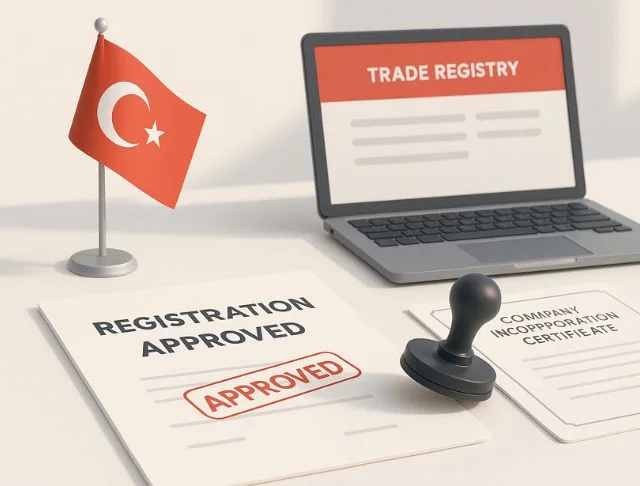
The employer must have a registered company in Turkey to hire employees. This legal entity could be an LLC, Joint Stock Company, or Liaison Office. Another way to hire employees without registering a company, while still fully complying with local laws, is by using an employer of record service.
Foreign companies can open branch offices in Turkey to expand the parent company. This branch operates under the parent company and does not require separate company registration, but business activities are limited. This is best for companies testing the Turkish market.
Subsidiaries, such as limited liability corporations or joint stock companies, are good options when full control over business activities is needed. The purpose of a liaison office is to conduct market research in Turkey. You can hire employees through a liaison office if you register with SGK, but the scope is very limited.
The employer must obtain a Tax Identification Number (TIN) before submitting documents to the trade registry. The TIN is essential because taxes are paid using it, and salary records are maintained with it.

Random contracts with undefined terms cannot be used when recruiting Turkish employees or expatriates. A compliant employment contract should include:
Turkish labor law strongly favors indefinite-term contracts. These contracts do not have defined end dates, and employees may qualify for severance pay. In a fixed-term contract, the end date is defined. It is also essential to mention the reason for ending the contract and there must be something like project start date and estimated finish date etc. If a contract is ended and renewed multiple times, the government treats it as an indefinite contract.
Employment contracts longer than one year must be in writing. Shorter contracts can technically be verbal, but written agreements are strongly recommended.

The Ministry of Labor and Social Security issues work permits. There are two main application routes:
The employer acts as the official sponsor of the foreign employee. This includes:
If any employer, whether local or foreign, hires employees without complying with Turkish labor laws, this can lead to:
Suspension of company activities in severe cases

Registering each employee with the Turkish Social Security Institute (SGK) is not optional; it is mandatory for employers. This institution provides employees with statutory benefits, such as health insurance.
Employers often make mistakes when they try to register employees at the time of payroll processing. This can lead to legal issues. The best time to register an employee with SGK is before their first workday.
Both employers and employees contribute to SGK on a monthly basis. The employer’s contribution ratio is higher, usually ranging from 15% to 23.75% of the employee’s gross salary.

Salaries cannot be paid lower than the minimum fixed threshold set by the Turkish government, even if both employees and employers agree. Additionally, excessive deductions cannot reduce the base salary below the legally mandated minimum wage.
The government calculates taxes, SGK premiums, and other salary-related obligations based on the gross salary. Employers sometimes make mistakes by negotiating net salaries with employees, which can later cause issues if employees raise disputes.
Note: If a person is employed under the same employment contract and under the same conditions (same working days/hours/duties/tasks), their salary may be increased in time, but it can never be reduced.
Local Turkish labor laws continuously change, and the minimum wage is typically reviewed and adjusted annually, sometimes twice per year depending on economic conditions. When a new minimum wage is announced, existing employment contracts must be updated if they fall below the new threshold.

The legal maximum working time is 45 hours per week. Employers can distribute the hours over six days. One rest day is usually Sunday. Daily working time generally cannot exceed 11 hours.
Overtime is allowed but strictly regulated. A maximum of 270 hours of overtime per year per employee is permitted. Employees cannot work more than this limit, even upon request.
Overtime must be compensated at higher rates than regular working hours.
Standard rule: Overtime pay = 150% of the normal hourly wage. This means the employee receives a 50% premium on top of their regular hourly rate.
If weekly hours are below 45 but exceed the agreed contractual hours, compensation may be paid at 125% (depending on the contract structure).
Alternatively, employees may choose compensatory time off (1.5 hours of leave for each overtime hour) if agreed in writing.

All employers in Turkey are legally responsible for calculating payroll correctly and withholding income tax on behalf of employees. Payroll in Turkey is calculated based on gross salary, not net. From the gross amount, employers must calculate and deduct:
Turkey applies a progressive income tax system. Tax rates increase as annual income rises. Employers must monitor cumulative taxable income, correct bracket application, and annual tax threshold updates.
Employers are responsible for filing and paying taxes to the Revenue Administration. Monthly obligations include withholding tax declarations, stamp tax declarations, and SGK premium declarations (separate filing).

The maximum probation period is 2 months. Note that employers can extend this probation period to 4 months only through a collective bargaining agreement. If the contract does not clearly mention a probation period, it is assumed that there is none.
Either party (employer or employee) can terminate the contract.
No notice period is required.
No notice compensation is payable.
However, termination must not be discriminatory.
Employees on probation:

Annual leave in Turkey depends on total years of service:
Employees are entitled to paid public holidays, including:
Employees must complete one year of employment to qualify for full annual leave.
Leave entitlement is generally calculated based on completed years of employment, although some employers may apply pro-rata leave policies for shorter employment periods.
Employers must track leave accruals, ensure unused leave is paid out upon termination or employee resignation, and avoid forcing employees to skip leave.

Termination must be based on one of the following:
Turkish law mandates notice periods based on employee tenure for indefinite-term contracts:
Length of Service | Notice Period |
0–6 months | 2 weeks |
6–18 months | 4 weeks |
18–36 months | 6 weeks |
36+ months | 8 weeks |
Severance pay applies to indefinite-term employees who have completed 1+ year of continuous service and are terminated without just cause.

Employers must:
Employers are required to provide OHS training:
Employers must conduct risk assessments to identify potential hazards:

Each employee must have a complete personnel file containing:
The main documents that the employer is generally required to sign with the employee are as follows:
Employers must retain all payroll and tax-related documents, including:
Each month, payrolls must be confirmed by the employee as well. Otherwise, it is not valid in case of suit.
Authorities may conduct unscheduled inspections to verify labor law compliance. Employers must be ready to provide:
Work permit documentation

Foreign employers looking to hire in Turkey face a complex legal landscape. From entity registration to employment contracts, work permits, social security, payroll, leave, and OHS compliance, each step is strictly regulated.
Attempting to navigate these rules without local expertise can result in:
FMC Group offers end-to-end Employer of Record (EOR) and HR compliance services:
By partnering with FMC Group, foreign companies can:
Bottom Line: Compliance with Turkish labor laws is non-negotiable for foreign employers. FMC Group ensures your workforce is fully legal, protected, and productive from day one.
You are currently viewing a placeholder content from Calendly. To access the actual content, click the button below. Please note that doing so will share data with third-party providers.
More InformationYou are currently viewing a placeholder content from Calendly. To access the actual content, click the button below. Please note that doing so will share data with third-party providers.
More InformationYou need to load content from reCAPTCHA to submit the form. Please note that doing so will share data with third-party providers.
More InformationYou are currently viewing a placeholder content from Turnstile. To access the actual content, click the button below. Please note that doing so will share data with third-party providers.
More InformationYou are currently viewing a placeholder content from Vimeo. To access the actual content, click the button below. Please note that doing so will share data with third-party providers.
More InformationYou need to load content from reCAPTCHA to submit the form. Please note that doing so will share data with third-party providers.
More InformationYou are currently viewing a placeholder content from Elfsight. To access the actual content, click the button below. Please note that doing so will share data with third-party providers.
More InformationYou are currently viewing a placeholder content from reCAPTCHA. To access the actual content, click the button below. Please note that doing so will share data with third-party providers.
More Information