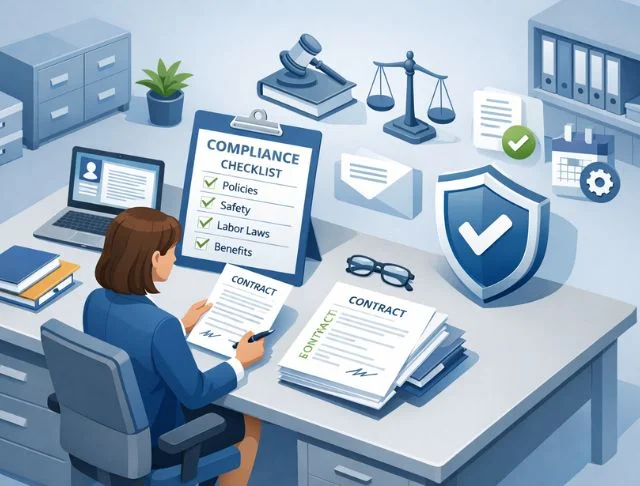
Workplace Culture in UAE: What Employers Need to Provide

Employees’ high retention rates help companies grow continuously.

They stay longer with companies that also focus on their workplace culture. Otherwise, the UAE requires employers to provide the best possible work experiences for their employees. So, an optimized workplace experience is not just optional; it’s necessary.

That’s why, in this post, I’ll guide you through useful practical tips that can enhance your employees’ well-being. You can stay compliant with laws and build long-term relationships with workers.

Picture of Leah Maglalang
Leah Maglalang

Author

Picture of Peter J. Heidinger
Peter J. Heidinger

Co-author

Workplace Culture in UAE What Employers Need to Provide

Employees’ high retention rates help companies grow continuously.

They stay longer with companies that also focus on their workplace culture. Otherwise, the UAE requires employers to provide the best possible work experiences for their employees. So, an optimized workplace experience is not just optional; it’s necessary.

That’s why, in this post, I’ll guide you through useful practical tips that can enhance your employees’ well-being. You can stay compliant with laws and build long-term relationships with workers.

Workplace Culture in UAE: What Employers Need to Provide

Picture of Leah Maglalang
Leah Maglalang

Author

Picture of Peter J. Heidinger
Peter J. Heidinger

Co-author

Table of Contents

Get in Touch with Us

leah

Leah Maglalang

Business Coordinator UAE

united states flag 

Understanding Workplace Culture in the UAE

Understanding Workplace Culture in the UAE

What Workplace Culture Means in the UAE

Workplace culture in the UAE refers to the shared values, behaviors, expectations, and professional standards that shape how employees and employers interact.

A positive workplace culture in the UAE consists of mutual respect, professionalism, inclusivity, clear communication, and compliance with labor regulations.

Why Workplace Culture Matters for Business Success

A strong workplace culture directly influences employee satisfaction, productivity, and retention.

The UAE has a competitive labor market. This is why talented professionals often prioritize employers that provide a supportive work environment.

Organizations with a positive culture have lower turnover rates and stronger employee engagement. A healthy workplace culture is also key to employer branding.

Key Characteristics of UAE Workplace Culture

Below are the key characteristics that UAE workplace culture should have, and employers must consider and provide them:

  • Multicultural Workforce
  • Blend of Local and Global Business Practices
  • Respect for Hierarchy and Leadership
  • Open Communication and Collaboration
  • Professionalism and Accountability
  • Punctuality and Strong Work Ethic
  • Respect for Religious and Cultural Practices
  • Diversity, Equity, and Inclusion
  • Employee Development and Continuous Learning
  • Compliance with Labor Laws and Regulations
  • Innovation and Adaptability
  • Teamwork and Cross-Cultural Cooperation
  • Employee Well-Being and Work-Life Balance
  • Customer-Centric Business Approach
  • Recognition and Reward-Based Culture
  • Corporate Social Responsibility and Ethical Conduct
  • Focus on Talent Retention and Engagement
  • Commitment to Business Growth and Excellence

Legal Requirements Employers Must Meet

Legal Requirements Employers Must Meet

Compliance With UAE Labor Laws

In the UAE, mainland private‑sector companies are directly governed by Federal Decree-Law No. 33 of 2021 and MoHRE regulations, while free zone companies are governed by the employment rules of their specific free zone authority, which are generally aligned with UAE Labour Law principles. The compliance obligations that employers should know are listed below:

  • Registering their company with the Ministry of Human Resources and Emiratisation (MoHRE)
  • Free zone employers must register with their Free Zone Authority, follow that authority’s employment regulations, and comply with any federal requirements that apply (e.g., WPS in DMCC/JAFZA, safety rules, visa rules) 
  • All employers must ensure timely salary payment, safe working conditions, and respect core employee rights 
  • Adhering to updated 2026 regulations
  • Providing a safe working environment

Employment Contracts and Workplace Policies

Under the current UAE Labour Law, all private‑sector employees must be employed on fixed‑term, written contracts rather than unlimited contracts. These contracts can run for up to three years and are renewable by mutual agreement between employer and employee. Each contract must clearly state the employee’s role and duties, salary and benefits, working hours and place of work, contract duration, notice period, and termination conditions, as well as a reference to the applicable UAE labour legislation. 

Working Hours, Overtime, and Leave Entitlements

Working hours and overtime: 8 hours per day or 48 hours per week; 6 hours per day during Ramadan.

Leave policy: Annual leave (30 days), sick leave (up to 90 days), maternity leave (60 days), and paternity leave (5 days).

Disciplinary procedures must align with Ministerial Resolution No. 47 of 2022, including misconduct classifications, warnings, suspension, termination, and the grievance appeal process.

Termination and gratuity: 30–90-day notice periods, final settlement within 14 days, and end-of-service gratuity based on basic salary (21–30 days per year).

Anti-discrimination provisions prohibit bias based on gender, nationality, race, religion, or disability.

Data privacy and safety: Clear data-handling guidelines and PPE protocols (Article 13).

Leave entitlements: Employees have the right to receive 30 days of paid leave per year.

Health and Safety Obligations

UAE employers, including free‑zone companies, must maintain a safe and healthy working environment in line with national OHS standards and local authority rules. This includes: 

  • Providing appropriate personal protective equipment (PPE) such as helmets, safety vests, protective footwear, and eye/ear protection where the job risk requires it (e.g., construction, industrial sites).
  • Displaying clear safety instructions and hazard signage that workers can understand, often using multiple languages where necessary.
  • Installing and regularly maintaining compliant fire‑prevention and protection systems, and ensuring emergency exits and procedures are in place.
  • Ensuring access to first‑aid and medical care at the employer’s expense, especially on high‑risk sites and in remote locations.
  • Conducting regular risk assessments and inspections of workplaces and labour accommodations to identify, control, and monitor occupational hazards.


Creating a Respectful and Inclusive Work Environment

Creating a Respectful and Inclusive Work Environment

Promoting Diversity in a Multinational Workforce

Employees in the UAE come from various cultural, linguistic, and professional backgrounds. Employers should foster an inclusive environment where employees feel respected and valued.

Preventing Workplace Discrimination and Harassment

Employers have to maintain a workplace free from discrimination, harassment, and any form of inappropriate behavior. You need to provide clear policies, employee training, and confidential reporting mechanisms.

Supporting Equal Opportunities for Employees

As employees come from different regions and cultures, employers must ensure fair access to recruitment, training, promotion, and career development opportunities. You should make employment decisions based on qualifications, skills, and performance.

Employee Well-Being and Work-Life Balance

Employee Well Being and Work Life Balance

Flexible Working Arrangements

Employees can better manage their professional and personal responsibilities when they have flexible working arrangements. Depending on the nature of the job, employers may offer options such as remote work, hybrid schedules, flexible start and end times, or compressed workweeks.

Mental Health and Wellness Initiatives

Employee well-being extends beyond physical health. Employees also need mental and emotional wellness. Employers should offer wellness programs and provide access to counseling services, mental health resources, and employee assistance programs.

Managing Employee Stress and Burnout

High workloads, tight deadlines, and prolonged workplace pressure are some factors that lead to employee stress and burnout. As an employer, you should identify potential stress factors and eliminate them.

Encouraging Healthy Work-Life Balance

A healthy work-life balance means employees can maintain productivity while meeting personal and family commitments. Employers can support this balance by respecting working hours, discouraging excessive overtime, and encouraging the use of annual leave.

Building Employee Engagement and Satisfaction

Building Employee Engagement and Satisfaction

Effective Internal Communication

Clear and consistent communication is essential for employee engagement. Every employee should be aware of company goals, workplace policies, business updates, and performance expectations.

Employee Recognition and Reward Programs

Recognizing employee contributions can significantly improve motivation, job satisfaction, and retention.

Employers should implement formal and informal recognition programs. Their purpose should be to reward outstanding performance, achievements, and dedication.

Gathering and Acting on Employee Feedback

Employee feedback provides valuable insights. These insights cover workplace culture, employee satisfaction, and areas for improvement.

Companies should collect feedback through surveys, meetings, and performance discussions. Then, employers should take meaningful action based on employee feedback.

Strengthening Team Collaboration

Strong collaboration helps employees work more effectively. If employers promote open communication, collaborative tools, and team-building activities, it can strengthen the team.

Workplace Ethics and Corporate Values

Workplace Ethics and Corporate Values

Establishing a Strong Code of Conduct

A code of conduct contains clear guidelines on expected workplace behavior, professional standards, and organizational values. Employers should develop and communicate policies that address ethics, integrity, and workplace interactions.

Promoting Transparency and Accountability

Transparency and accountability are essential for building trust. Employees should have access to information about all important company decisions related to them. Employers should define responsibilities clearly. Encouraging accountability at all levels helps improve performance.

Encouraging Ethical Business Practices

Ethical business practices help organizations maintain credibility, protect their reputation, and comply with legal and regulatory requirements. You should promote honesty, fairness, integrity, and responsible decision-making in all business activities.

Cultural Considerations for Employers in the UAE

Respecting Local Customs and Traditions

Employers operating in the UAE should understand and respect local customs, traditions, and social norms. When employers demonstrate respect for local culture, it can build stronger relationships with employees, clients, and business partners.

Managing Cross-Cultural Teams

Employers should encourage mutual respect, cultural awareness, and open communication among team members. When diversity training and inclusive leadership are offered, they reduce misunderstandings and improve collaboration.

Religious and Cultural Accommodations in the Workplace

Employers should make reasonable accommodations for employees’ religious beliefs. This may include providing flexibility for prayer times, adjusting work schedules during Ramadan, and recognizing religious holidays.

Conclusion: Creating a Thriving Workplace Culture in the UAE with FMC Group

If you want to build a positive workplace culture in the UAE, you need more than legal compliance. Employers must prioritize diversity, employee well-being, ethical business practices, and cultural inclusivity to attract and retain top talent.

FMC Group’s Employer of Record services simplify workforce management for companies that want to hire and manage employees in the UAE. From onboarding and payroll administration to HR support and employee management, FMC Group can help you establish a strong foundation for a thriving workplace culture in the UAE.

Get In Touch With Leah​

We are looking forward to hearing from you

Schedule a Meeting